A lunar workhorse, shown first at home
Venturi Space used a princely visit to its Fontvieille facilities on Monday to put its newest rover through its paces. ALTA LUNA is not an explorer. It is a utility vehicle, built for the unglamorous work a lunar base will need done every day.
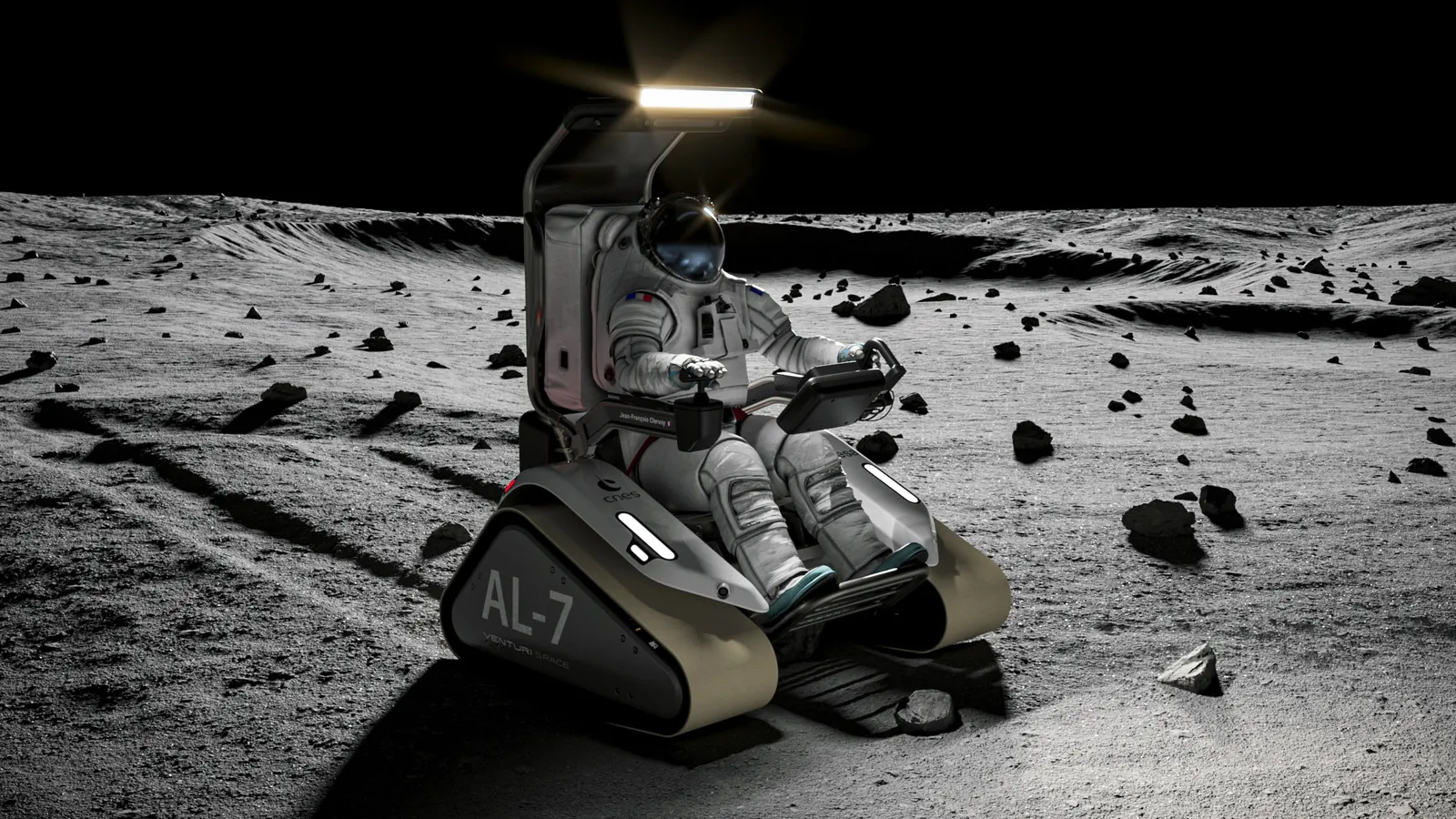
The visit was short, and its staging was precise. On Monday, Prince Albert II went to Venturi Space's facilities in Fontvieille to see ALTA LUNA, the lunar rover the Monaco-based company presented in Paris in September. The company's president, Gildo Pastor, received him, he met the teams behind the vehicle, and the French astronaut Jean-François Clervoy took the controls for a demonstration drive in front of the Prince. Two independent reports of the afternoon, published on Tuesday and Wednesday, agree on each of those elements. What they were showing the Sovereign was not a flag-planting machine. It was something rarer in the space business, and arguably more necessary: a work vehicle.
ALTA LUNA was unveiled on 9 September at the International Space Summit in Paris, and the company's own release describes a compact, manoeuvrable machine meant for short-range work around the lunar bases of the future. It is built for one astronaut, with a target mass of 300 kilograms and a target speed of 15 kilometres an hour, and it can be driven by its passenger or operate autonomously, with several vehicles able to work individually or in coordination. Its onboard systems are designed to connect to the astronaut's spacesuit and collect health data, and, in the company's account, to bring the astronaut back to base autonomously if they become unwell, while warning of hazards in the space environment such as an approaching solar storm. For the first time in its lunar programmes, Venturi Space has given the vehicle tracks rather than wheels; tracks, the company says, should let it climb steeper slopes than the wheeled vehicles it has built until now.
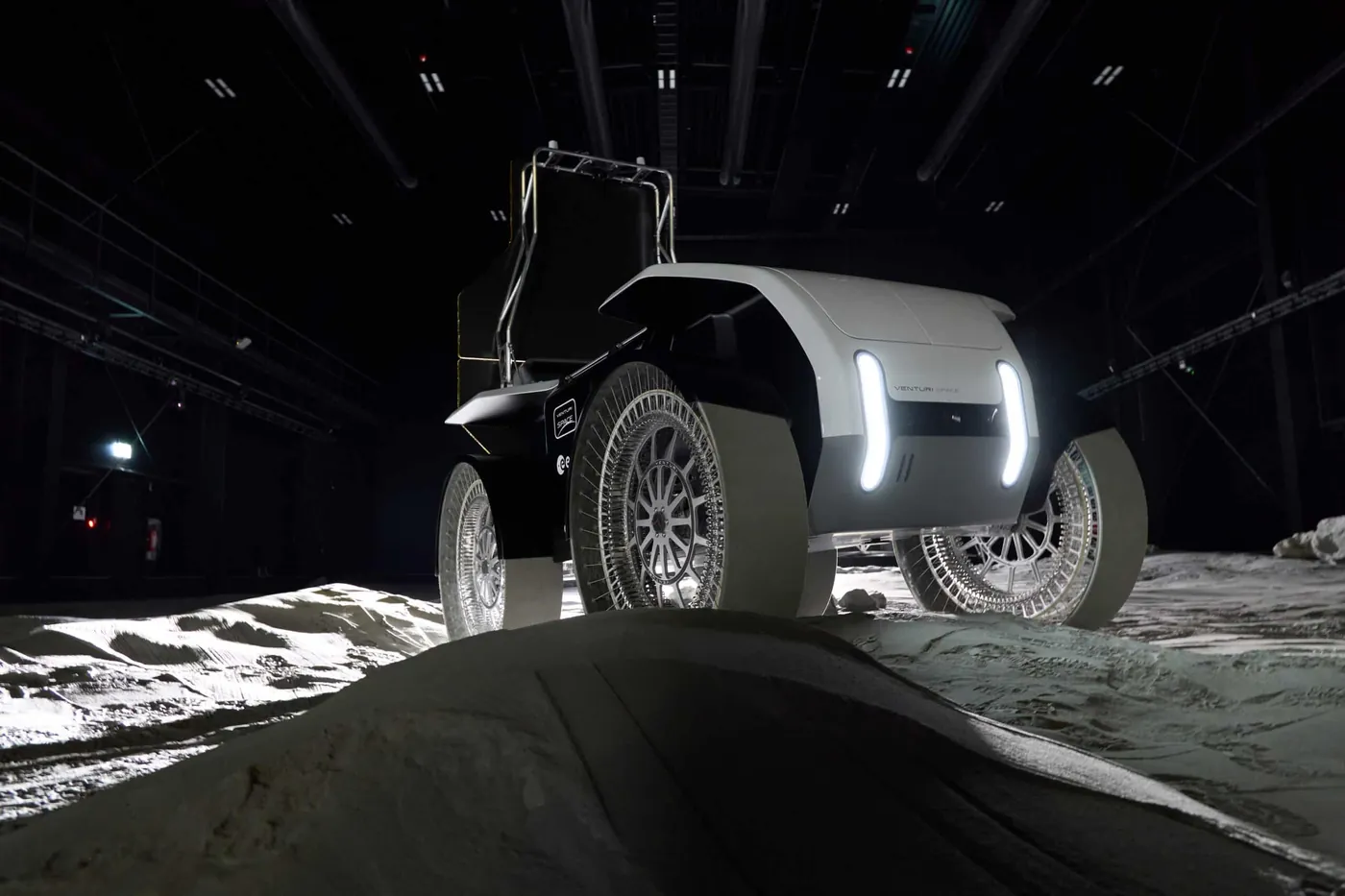
The work list is deliberately unglamorous. Both reports of Monday's presentation and the company's own material describe the same set of tasks: transporting equipment and materials, handling and moving payloads, excavating ground, levelling and preparing terrain around habitats and infrastructure. This is the logistics layer of a lunar base, the part that has to function every day rather than once, and it explains the vehicle's shape. An exploration rover is a scientific instrument that happens to move. A utility rover is a piece of site equipment that happens to be on the Moon. Venturi Space already has the first kind: MONA LUNA, its European exploration rover, was unveiled at the Paris Air Show in June 2025, fifteen months before ALTA LUNA. Monday's presentation was the company showing its second answer, for the second kind of job.
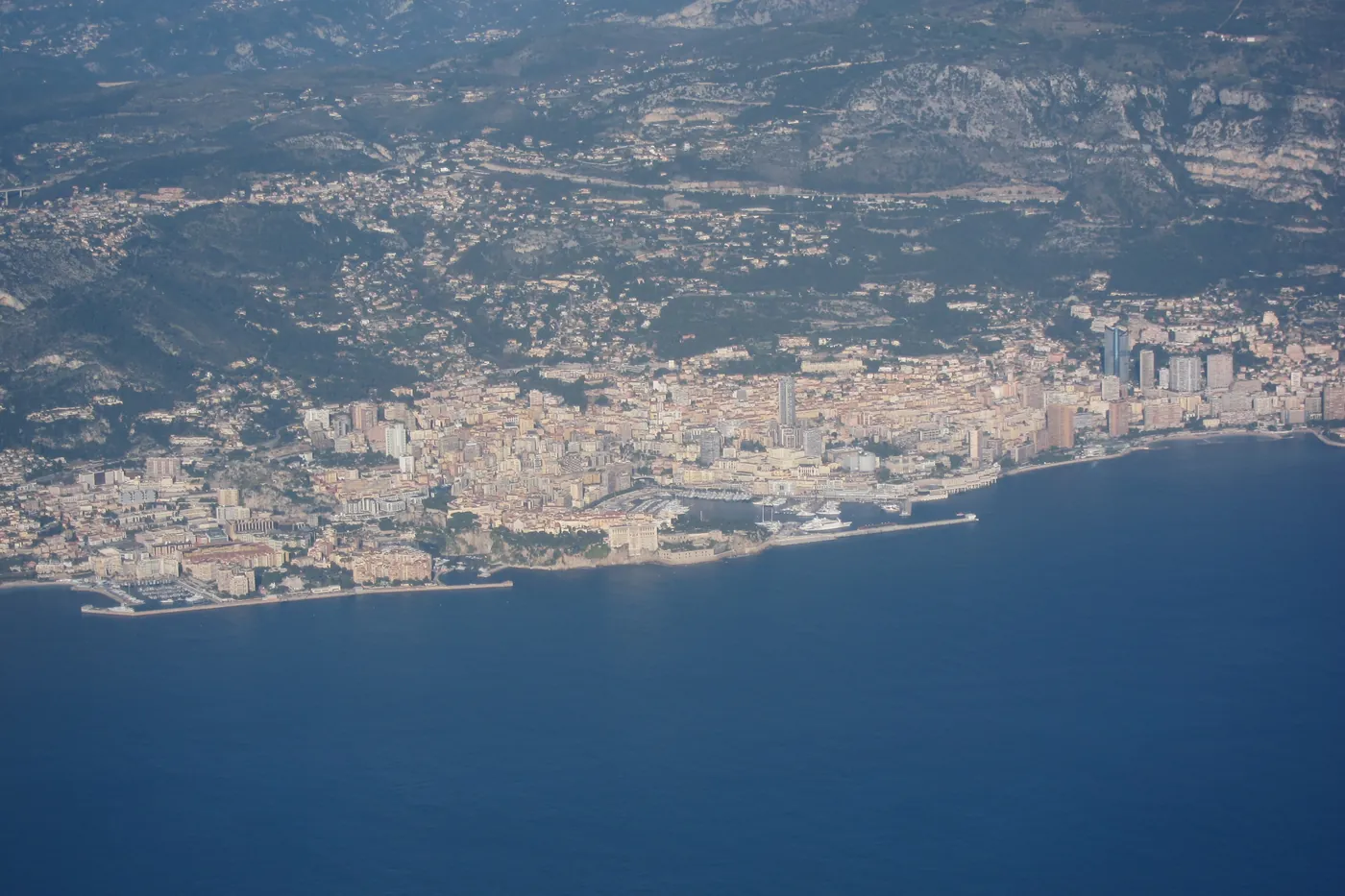
The Monegasque content of the machine is specific, and it is the part of the story that belongs to this principality rather than to Paris or Houston. ALTA LUNA's batteries are designed and built in Monaco, and its battery management system comes from the company's technology centre in Toulouse. It is the same pairing that equips CLV-1, the crewed vehicle developed by its North American partner Venturi Astrolab and selected by NASA for the Artemis campaign. The same Monaco-made batteries will fly sooner than either rover: they equip FLIP, the Astrolab rover whose launch towards the lunar South Pole, aboard Astrobotic's Griffin-1 lander, is scheduled by the end of this year. A company founded five years ago, working from Fontvieille, Switzerland and Toulouse, now has its hardware threaded through three separate lunar programmes.
Monaco's government has begun to treat that fact as a diplomatic asset, not only an industrial one. At the 77th International Astronautical Congress in Antalya, the Principality's representative from its Office for Outer Space Affairs, Olivier Minazzoli, used a round table on the lunar economy to argue that the return to the Moon is becoming an economic and industrial undertaking, and that its rules should be built on dialogue and international cooperation rather than unilateral action, with lunar resources never becoming a means of appropriation or exclusion. The government's own account of that intervention names Venturi Space's contribution, its batteries for FLIP, the CLV-1 selection and the MONA LUNA and ALTA LUNA rovers, as the tangible part of the argument. Monday's visit in Fontvieille was the domestic version of the same presentation: the Sovereign, an astronaut at the controls, and a small tracked vehicle that treats the Moon not as a destination but as a workplace.
None to date. The Chronicle corrects errors promptly and transparently. Read our corrections policy.